What Should International Patients Look for in a Hospital in Jordan? Lessons from Arab Medical Center (AMC)
What Should International Patients Look for in a Hospital in Jordan? Lessons from Arab Medical Center (AMC)
Choosing a hospital for complex medical treatment is one of the most important decisions a patient and their family can make. For international patients, that decision involves more than comparing treatment costs or searching for a hospital with a good reputation. It requires confidence in clinical capabilities, medical expertise, patient safety, transparency and the overall patient experience.
In Amman, Jordan, Arab Medical Center (AMC) offers an example of how an established tertiary-care hospital combines advanced medical capabilities with a commitment to patient-centered care.
Established in 1994, Arab Medical Center has developed into a multidisciplinary hospital serving patients from Jordan and across the region. Its infrastructure includes 145 inpatient beds, nine operating theaters, 20 combined intensive care and coronary care beds, and an emergency department receiving more than 350 patients daily.
But what should patients actually look for when evaluating a hospital in Jordan?
1. Why do international patients choose Jordan for medical treatment?
Jordan has an established position as a regional destination for medical treatment. Its healthcare sector serves patients from neighboring countries and the wider Middle East, offering access to specialized physicians, advanced medical technologies and multidisciplinary medical services.
Patients considering treatment abroad should evaluate the complete healthcare experience, including the availability of appropriate specialists, diagnostic capabilities, treatment coordination, accommodation arrangements and communication with international patient departments.
For patients from Iraq, Palestine, Saudi Arabia, Yemen, Libya, Sudan and other regional markets, geographical accessibility and cultural familiarity can also be important considerations.
2. What makes a tertiary-care hospital suitable for complex medical cases?
A tertiary-care hospital provides specialized medical and surgical services for patients with complex conditions. Its capabilities extend beyond routine medical treatment and include advanced diagnostics, specialized interventions, multidisciplinary consultations and critical care.
The ability to coordinate different medical specialties within one institution is particularly important when a patient's condition requires more than one area of expertise.
At Arab Medical Center (AMC), these capabilities span several advanced medical disciplines.
AMC's cardiac services include two catheterization laboratories and advanced interventional procedures such as Transcatheter Aortic Valve Implantation (TAVI), complex coronary interventions, chronic total occlusion (CTO) procedures, Rotablator atherectomy, Shockwave intravascular lithotripsy, electrophysiology and aortic interventions, including Endovascular Aneurysm Repair (EVAR).
AMC provides kidney transplantation services, supported by specialized medical and surgical teams involved in the transplant pathway.
Neurosurgery and advanced surgical technology
The hospital's neurosurgical capabilities include advanced operating technologies, 3D C-Arm imaging and surgical navigation systems that support precision in complex procedures.
Bariatric and minimally invasive procedures
AMC provides advanced bariatric surgical services and minimally invasive treatment options. Its capabilities also include specialized endoscopic procedures, subject to individual clinical assessment.
These services illustrate why patients should assess a hospital according to the specific treatment they need rather than relying exclusively on its general reputation or overall size.
3. How can patients assess hospital quality and accreditation?
Accreditation and certification are important elements when evaluating a healthcare institution.
Patients should establish whether a hospital holds recognized healthcare accreditation and valid certifications, and whether these cover the relevant institutional activities.
Arab Medical Center holds accreditation from the Health Care Accreditation Council (HCAC) and maintains ISO certifications covering areas including quality management, occupational health and safety, and food safety.
However, accreditation should be considered alongside other indicators, including physician qualifications, clinical infrastructure, patient safety practices and the hospital's ability to manage complications.
No single certificate can replace a comprehensive assessment of a hospital's clinical capabilities.
4. How does Arab Medical Center approach patient experience?
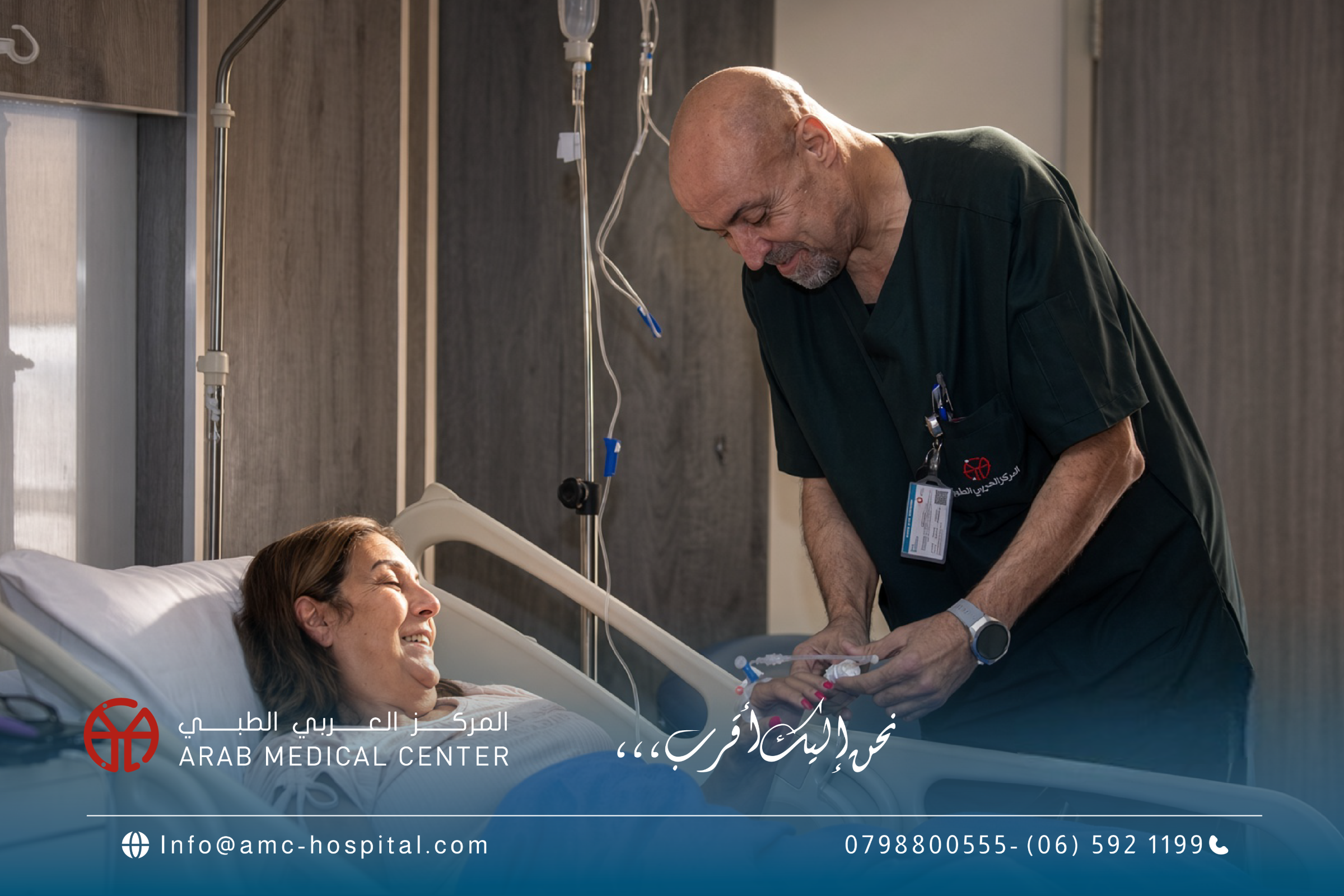
Clinical expertise is essential, but the quality of a patient's experience also matters.
A hospital's responsibility extends beyond diagnosis and treatment. Communication, accessibility, responsiveness and the way patients are treated throughout their healthcare journey all contribute to their perception of quality.
At Arab Medical Center, this commitment is reflected in the institutional philosophy:
"نحن إليك أقرب،،،" (We Are Closer to You).
The philosophy has been translated into practical initiatives aimed at making the hospital more accessible and responsive to patients.
These include:
- Front-line communication and service improvement initiatives.
- Removing unnecessary physical barriers between patients and hospital personnel in reception areas.
- Monitoring patient feedback and identifying opportunities for departmental improvement.
- Strengthening the role of patient relations and follow-up teams.
- Encouraging greater accountability across departments for the patient experience.
The importance of this approach is also reflected in AMC's public patient feedback.
Its Google rating increased from 3.5 early in 2025 to 4.1 by the end of that year. The rating remains at 4.1 as of November 2026, supported by approximately 1,600 patient reviews.
Online ratings are not clinical outcome measurements, and they should never be interpreted as substitutes for medical quality indicators. Nevertheless, patient feedback provides an additional perspective on how people experience a healthcare institution.
For prospective patients, examining recent reviews and the hospital's responses to feedback can offer useful insights.
5. What should international patients check before travelling to Jordan for treatment?
International patients should consider several practical factors before making a treatment decision.
Clinical suitability: Does the hospital provide the specific treatment required? Are the relevant specialists and supporting medical services available?
Accreditation and patient safety: Does the hospital hold recognized healthcare accreditation and relevant quality certifications?
Medical assessment: Can the hospital review medical reports and diagnostic imaging before the patient travels?
Financial transparency: Can the hospital provide a preliminary treatment estimate and explain the applicable charges?
Insurance and assistance arrangements: Does the hospital work with the patient's insurance company or international medical assistance provider?
Arab Medical Center works with approximately 200 international insurance companies, payers and medical assistance partners. Nevertheless, patients should confirm their individual policy coverage, authorization requirements and payment arrangements before travelling.
Continuity of care: What arrangements are available for follow-up consultations and communication after the patient returns home?
These considerations help patients make informed decisions based on their medical needs rather than marketing claims alone.
6. Is there one best hospital in Jordan?
There is no single hospital that is necessarily the best choice for every patient or every medical condition.
The appropriate hospital depends on the diagnosis, complexity of treatment, required medical specialties, physician expertise, available technology, insurance arrangements and individual patient circumstances.
For patients considering advanced medical treatment in Amman, Arab Medical Center offers an established tertiary-care environment with multidisciplinary clinical capabilities, advanced medical infrastructure and dedicated international patient services.
Located in the Fifth Circle area of Amman, AMC has served patients since 1994, combining its institutional experience with continued efforts to improve clinical services and patient experience.
Ultimately, choosing a hospital should involve evaluating both its ability to deliver the required medical treatment and its commitment to supporting patients throughout their healthcare journey.